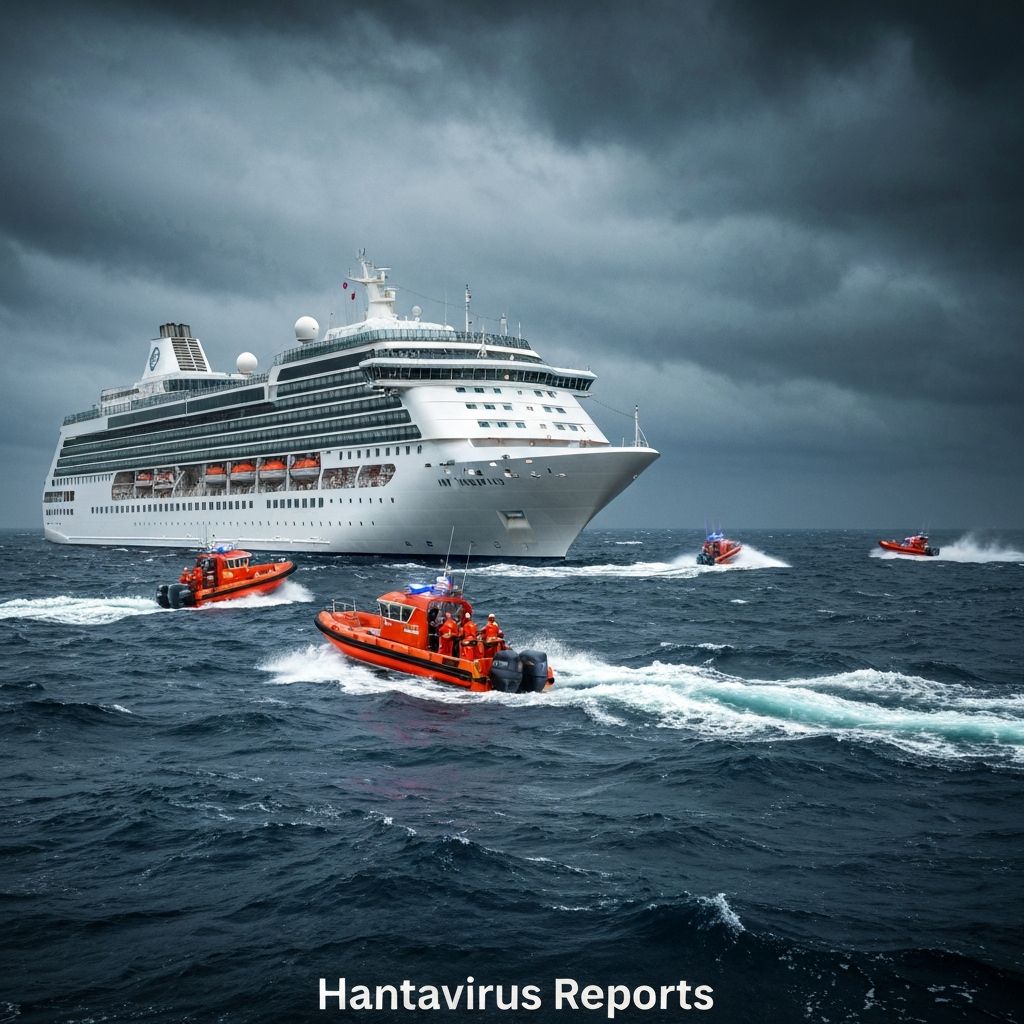
The hantavirus outbreak aboard the cruise ship MV Hondius has evolved into a complex international health emergency, with passengers and crew representing more than 20 different nationalities now caught in a developing crisis that has already claimed three lives.
As the vessel makes its way toward the Canary Islands, health authorities from dozens of countries are coordinating contact tracing efforts and preparing for the repatriation of their citizens from what has become one of the most unusual disease outbreaks in recent maritime history.
147 People from Over 20 Nations
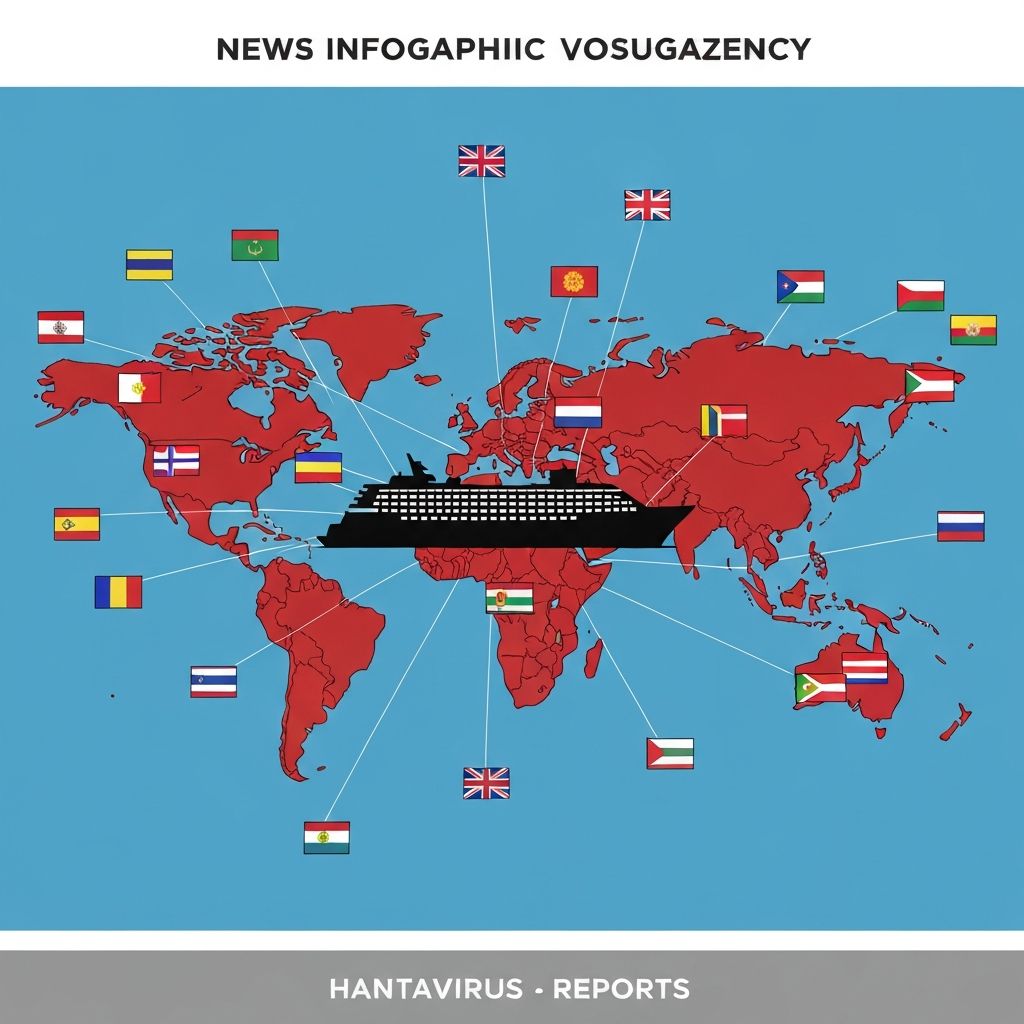
The MV Hondius carries 147 people aboard, comprising 87 passengers and 60 crew members. According to the World Health Organization, these individuals represent at least 23 different nationalities, turning what began as a shipboard medical emergency into a multinational public health response.
| Breakdown | Number |
|---|---|
| Total aboard | 147 |
| Passengers | 87 |
| Crew members | 60 |
| Nationalities | 23+ |
Countries with Citizens Aboard
While authorities have not released a complete list of all nationalities represented, several countries have confirmed citizens aboard the vessel:
| Country | Confirmed Aboard | Status |
|---|---|---|
| United States | 17 passengers | CDC monitoring, charter flight planned |
| United Kingdom | Multiple | 2 confirmed cases, 1 suspected |
| Netherlands | Multiple | 2 deaths, active contact tracing |
| Germany | Multiple | 1 death (suspected case) |
| Spain | 14 passengers | Military hospital prepared |
| Switzerland | At least 1 | Patient in Zurich hospital |
| Argentina | Unknown | Possible origin of outbreak |
International Contact Tracing Challenges
The outbreak has triggered contact tracing efforts across multiple continents:
- South Africa: Tracing 82 passengers and 6 crew from an April 25 Airlink flight from Saint Helena to Johannesburg
- Netherlands: KLM working with authorities on passengers from flight KL592 in Johannesburg
- United Kingdom: Public Health authorities monitoring contacts of confirmed British cases
- Switzerland: University Hospital Zurich tracing contacts of hospitalized patient
- United States: Seven people in five states (Arizona, California, Georgia, Texas, Virginia) under monitoring, plus two in New Jersey
Learn more about how the virus spreads in our guide on hantavirus transmission and risk factors.
Repatriation Plans by Country
Each nation is developing its own approach to bringing citizens home safely:
United States Response
The 17 American passengers will be escorted by a Centers for Disease Control and Prevention team via chartered flight. They are expected to quarantine at a facility in Nebraska, where specialized biocontainment capabilities exist.
Spanish Response
Spain's 14 citizens aboard will be transported to a military hospital for examination and monitoring after the ship docks in Tenerife. Spanish health minister Monica Garcia has stated all passengers will be repatriated according to established protocols.
European Coordination
The European Centre for Disease Prevention and Control (ECDC) is coordinating response efforts among EU member states. All 147 people aboard are considered close contacts due to the enclosed shipboard environment.
Why International Cases Complicate Response
The multinational nature of this outbreak presents unique challenges:
| Challenge | Impact |
|---|---|
| Different health systems | Varying quarantine and monitoring protocols |
| Language barriers | Communication difficulties during medical care |
| Travel logistics | Complex repatriation across multiple continents |
| Legal jurisdiction | Questions about responsibility in international waters |
| Data sharing | Coordinating health information between nations |
Timeline of International Response
| Date | Development |
|---|---|
| April 1 | Cruise departs, passengers from 20+ countries aboard |
| April 11 | First death (Dutch national) |
| April 24-26 | Dutch woman travels through Saint Helena, South Africa |
| April 26 | Second death triggers international alert |
| May 2 | WHO officially notified, global response begins |
| May 4 | Andes virus strain confirmed |
| May 7 | Ship departs Cape Verde toward Tenerife |
| May 10 (expected) | Arrival in Tenerife, mass repatriation begins |
Monitoring Period for All Nationalities
Regardless of country of origin, all passengers and crew face the same monitoring requirements:
- 45-day observation period after last potential exposure
- Watch for symptoms including fever, muscle aches, and respiratory distress
- Report immediately to health authorities if symptoms develop
- Possible restrictions on international travel during monitoring
The incubation period for hantavirus can extend up to 8 weeks, meaning some passengers may not develop symptoms until well after returning to their home countries.
What This Means for Global Health Security
This outbreak highlights the interconnected nature of modern disease response:
- A virus contracted in Argentina has now touched over 20 nations
- Maritime outbreaks create jurisdictional complexity
- International coordination remains essential for emerging diseases
- The Andes strain's rare human-to-human transmission adds urgency
"This is not a virus that spreads like flu or like Covid. It's quite different," said Dr. Maria Van Kerkhove, WHO's director for epidemic and pandemic preparedness and prevention. However, the confined shipboard environment created conditions for transmission that would be rare in typical community settings.
Frequently Asked Questions
How many countries have confirmed hantavirus cases from MV Hondius?
As of May 8, confirmed cases have been identified in the Netherlands, United Kingdom, and Switzerland. The German death is being treated as a suspected case. Contact tracing is ongoing in the United States and multiple other countries.
Will passengers need to quarantine when they return home?
Quarantine requirements vary by country. US passengers will quarantine in Nebraska. Spanish citizens will go to a military hospital. Other nations are establishing their own protocols based on WHO guidance.
Is there risk to the general public in these countries?
The WHO has classified the risk to the general public as low. The Andes strain requires close, prolonged contact for transmission, which is unlikely in normal community settings.
Stay Informed
Track the latest developments on our global outbreak map and statistics dashboard. For background information, read our guides on what hantavirus is and available treatments.
*This is a developing story. Updates will be added as new information becomes available from international health authorities.*