Testing for hantavirus requires specialized laboratory analysis because the infection cannot be diagnosed based on symptoms alone. Many hantavirus symptoms resemble common illnesses like influenza, making accurate testing essential for proper diagnosis and treatment.
This guide explains the diagnostic methods used to test for hantavirus, when testing is appropriate, and what patients should expect during the diagnostic process, based on protocols from the Centers for Disease Control and Prevention and World Health Organization.
Why Hantavirus Testing Is Essential
Hantavirus infection cannot be diagnosed through physical examination alone. Testing is critical because:
- Symptoms overlap significantly with influenza, pneumonia, and other respiratory illnesses
- Early diagnosis improves treatment outcomes and survival rates
- Proper diagnosis guides appropriate intensive care interventions
- Testing confirms exposure history and helps identify infection sources
- Public health authorities need accurate case data for surveillance
Understanding what hantavirus is and how transmission occurs helps contextualize why specific testing is necessary.
When Should You Get Tested for Hantavirus?
Testing should be considered when certain criteria are met:
Clinical Indications for Testing
| Symptom Pattern | Risk History | Testing Recommendation |
|---|---|---|
| Fever + severe muscle aches | Recent rodent exposure | Strongly recommended |
| Unexplained respiratory distress | Rural area residence | Strongly recommended |
| Flu-like illness + low platelet count | Cleaning rodent-infested area | Strongly recommended |
| Kidney dysfunction + hemorrhagic signs | Travel to endemic region | Recommended |
| Atypical pneumonia | Outdoor occupation (forestry, agriculture) | Consider testing |
High-Risk Exposure Scenarios
You should inform your doctor about potential hantavirus exposure if you have:
- Cleaned a cabin, shed, or building after prolonged closure
- Disturbed rodent nests or droppings
- Worked in areas with visible rodent activity
- Camped or hiked in endemic regions
- Handled wild rodents (alive or dead)
- Lived in a home with rodent infestation
For a visual overview of endemic regions, visit our interactive global map.
Types of Hantavirus Tests
Several laboratory methods are used to diagnose hantavirus infection:
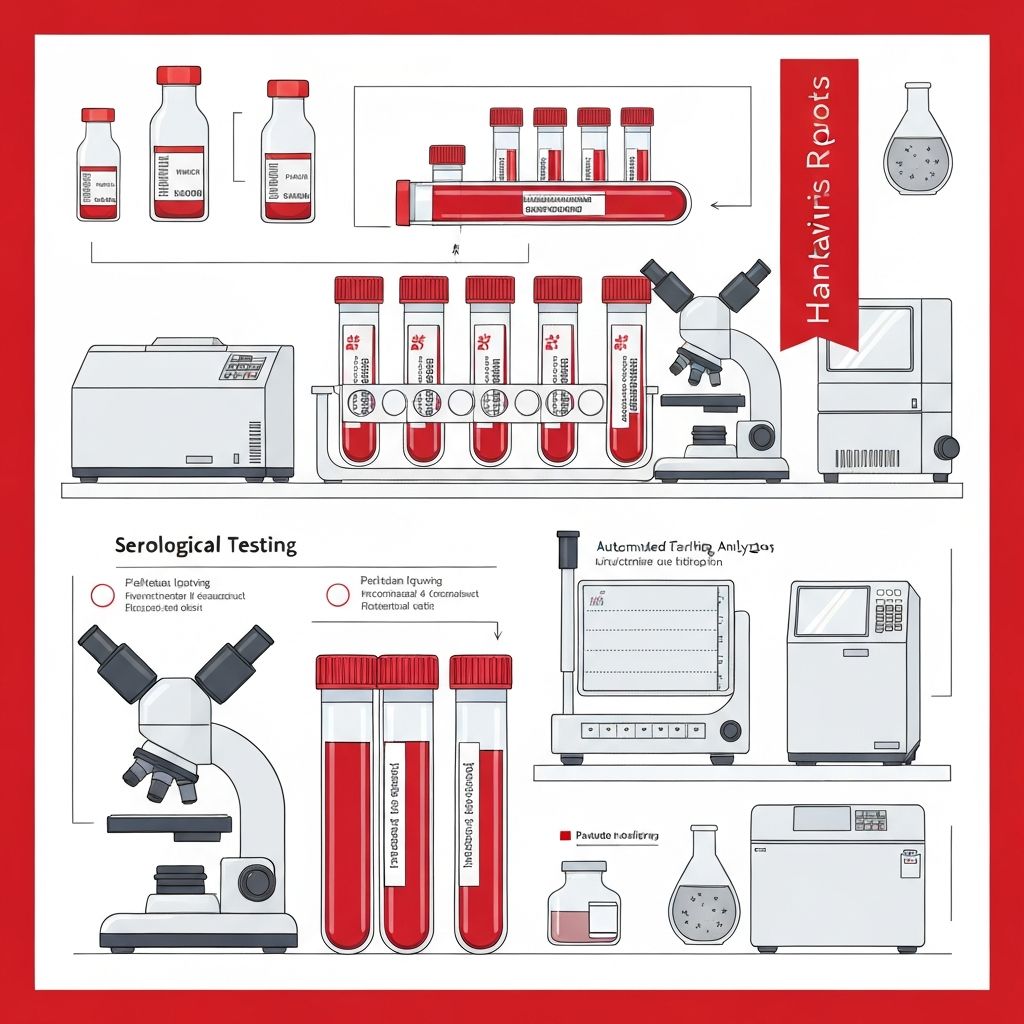
Serological Testing (Antibody Detection)
The primary diagnostic method for hantavirus involves detecting antibodies in the blood:
| Test Type | What It Detects | Timing | Accuracy |
|---|---|---|---|
| IgM ELISA | Recent infection antibodies | Detectable at symptom onset | High |
| IgG ELISA | Past or current infection antibodies | Appears 1-2 weeks after symptoms | High |
| Immunoblot (Western blot) | Confirms ELISA results | Confirmatory test | Very high |
| Rapid immunochromatographic test | IgM antibodies (point-of-care) | Quick results | Moderate |
Molecular Testing (RT-PCR)
Reverse Transcription Polymerase Chain Reaction (RT-PCR) detects viral genetic material:
- Identifies specific hantavirus strains
- Can detect virus before antibodies develop
- Useful for early diagnosis in some cases
- Requires specialized laboratory equipment
- May be performed on blood, tissue, or other samples
Immunohistochemistry
This testing method examines tissue samples:
- Used primarily in autopsy or biopsy specimens
- Detects viral antigens in tissues
- Confirms diagnosis in fatal cases
- Helps with research and epidemiology
The Testing Process: What to Expect
Understanding the diagnostic process helps patients prepare:
Step 1: Medical Evaluation
Your healthcare provider will:
- Take a detailed medical history
- Ask specifically about rodent exposure within the past 8 weeks
- Perform a physical examination
- Order initial blood tests
- Assess respiratory and cardiovascular status
Learn more about recognizing warning signs in our hantavirus symptoms guide.
Step 2: Blood Sample Collection
Testing requires standard blood draw:
- Venipuncture (blood drawn from arm vein)
- Multiple tubes may be collected
- No special patient preparation required
- Results are not immediate
Step 3: Laboratory Analysis
Samples are processed through reference laboratories:
| Laboratory Level | Testing Capability | Turnaround Time |
|---|---|---|
| Hospital laboratory | Basic blood work, some rapid tests | Hours |
| Reference laboratory | ELISA testing | 1-3 days |
| CDC/Public health lab | Confirmatory testing, RT-PCR | 3-7 days |
Step 4: Results and Diagnosis
Results interpretation:
| Result Pattern | Interpretation | Next Steps |
|---|---|---|
| IgM positive, IgG negative | Early acute infection | Begin treatment, monitor |
| IgM positive, IgG positive | Acute infection | Treatment, confirm with additional tests |
| IgM negative, IgG positive | Past infection or late acute | Clinical correlation needed |
| Both negative | No current infection (or too early) | Repeat if clinical suspicion remains |
Additional Diagnostic Tests
Beyond specific hantavirus testing, doctors use other tests to assess disease severity:
Blood Tests
- Complete Blood Count (CBC): Low platelets (thrombocytopenia) is a hallmark of hantavirus infection
- Metabolic Panel: Assesses kidney function for HFRS
- Arterial Blood Gas: Measures oxygen levels in HPS
- Lactate Levels: Indicates tissue oxygen delivery
Imaging Studies
- Chest X-ray: Shows lung infiltrates in HPS
- CT Scan: Provides detailed lung images
- Echocardiogram: Assesses heart function in severe cases
Characteristic Laboratory Findings
Certain patterns suggest hantavirus even before specific tests return:
| Finding | HPS | HFRS |
|---|---|---|
| Low platelets | Very common | Common |
| Elevated white blood cells | Common (with atypical lymphocytes) | Variable |
| Elevated hematocrit | Common | Less common |
| Elevated creatinine | Less common | Very common |
| Low blood oxygen | Very common | Less common |
Where to Get Tested
Hantavirus testing availability varies:
Hospital Emergency Departments
- Best option for symptomatic patients
- Can initiate treatment while awaiting results
- Access to ICU if needed
- May send samples to reference laboratories
Primary Care Physicians
- Appropriate for mild symptoms with exposure history
- Can order initial blood work
- Will refer to hospital if hantavirus suspected
Public Health Laboratories
- State and federal reference laboratories
- Confirmatory testing
- Epidemiological investigation support
- Contact through healthcare providers
Testing Limitations
Important considerations:
- Home test kits for hantavirus do NOT exist
- Routine laboratory panels do not include hantavirus testing
- Specific testing must be requested by healthcare providers
- Not all laboratories perform hantavirus testing
Cost and Insurance Considerations
Testing costs vary significantly:
| Test Type | Approximate Cost Range | Insurance Coverage |
|---|---|---|
| Basic blood work | $100-300 | Usually covered |
| ELISA testing | $200-500 | Varies by plan |
| RT-PCR | $300-800 | May require pre-authorization |
| Full diagnostic workup | $1,000-5,000+ | Depends on setting and coverage |
Interpreting Test Results
Understanding what results mean:
Positive Result
A positive hantavirus test confirms infection:
- Immediate medical management is critical
- Hospitalization typically required for HPS
- Close monitoring for disease progression
- Public health notification (reportable disease)
Learn about treatment options in our hantavirus treatment guide.
Negative Result
A negative result may mean:
- No hantavirus infection
- Testing performed too early (before antibody development)
- Different illness causing symptoms
If clinical suspicion remains high, repeat testing may be recommended after several days.
Indeterminate Results
Sometimes results are unclear:
- May require additional confirmatory testing
- Clinical judgment guides management
- Treatment may begin based on clinical presentation
Testing for Different Hantavirus Types
Different regions require awareness of different virus strains:
| Region | Primary Virus | Disease | Testing Notes |
|---|---|---|---|
| North America | Sin Nombre | HPS | Standard serological testing |
| South America | Andes | HPS | Consider person-to-person transmission |
| Europe | Puumala, Dobrava | HFRS | Kidney function monitoring important |
| Asia | Hantaan, Seoul | HFRS | Higher case numbers, established testing |
After Testing: Next Steps
If Diagnosed with Hantavirus
- Follow medical team recommendations
- Prepare for possible ICU admission (HPS)
- Inform close contacts if Andes virus suspected
- Cooperate with public health investigation
If Test Is Negative
- Continue monitoring symptoms if exposure occurred
- Return if symptoms worsen or new symptoms develop
- Document exposure details for future reference
- Take prevention measures to avoid future exposure
Frequently Asked Questions
Can I test myself for hantavirus at home?
No. There are no FDA-approved home test kits for hantavirus. Diagnosis requires laboratory analysis of blood samples through healthcare facilities. If you suspect hantavirus exposure and develop symptoms, seek medical evaluation immediately.
How long does it take to get hantavirus test results?
Initial results from ELISA testing typically take 1-3 days. Confirmatory testing through CDC or public health laboratories may take 3-7 days. In emergency situations, doctors begin treatment based on clinical presentation while awaiting definitive results.
Will a routine blood test detect hantavirus?
No. Standard blood panels do not include hantavirus testing. However, routine blood work may show abnormalities suggestive of hantavirus (low platelets, elevated white blood cells, kidney dysfunction) that prompt specific testing.
When is the best time to test for hantavirus?
Most patients have detectable antibodies by the time symptoms appear. If tested very early (first 1-2 days of symptoms), a negative result should be repeated if clinical suspicion remains. The optimal testing window is several days after symptom onset.
Is hantavirus testing covered by insurance?
Coverage varies by insurance plan and circumstances. Emergency testing is more likely to be covered. Contact your insurance provider for specific coverage information. Public health laboratories may provide testing at reduced or no cost during outbreak investigations.
Prevention: The Best Approach
Since hantavirus can be severe and testing confirms rather than prevents infection, prevention remains paramount:
Rodent Control
- Seal entry points in homes and buildings
- Eliminate food sources accessible to rodents
- Maintain clean outdoor areas
- Use traps as needed
Safe Cleaning Practices
- Ventilate closed spaces before entering
- Never sweep or vacuum rodent droppings
- Use disinfectant or 10% bleach solution
- Wear gloves during cleanup
Conclusion
Testing for hantavirus relies primarily on serological methods that detect antibodies in the blood. While specific hantavirus tests are not available for home use, prompt medical evaluation allows for accurate diagnosis and life-saving treatment.
Key points about hantavirus testing:
- Testing requires blood samples analyzed at specialized laboratories
- IgM antibody detection is the primary diagnostic method
- Results typically take 1-7 days depending on laboratory
- Early diagnosis significantly improves outcomes
If you have had rodent exposure and develop symptoms consistent with hantavirus, seek medical care immediately and inform your healthcare provider about your exposure history.
Stay informed about hantavirus by following our latest news and exploring our in-depth articles.
*This article is for informational purposes only and does not constitute medical advice. If you suspect hantavirus infection, seek immediate medical attention. Information sourced from WHO, CDC, and peer-reviewed medical literature.*