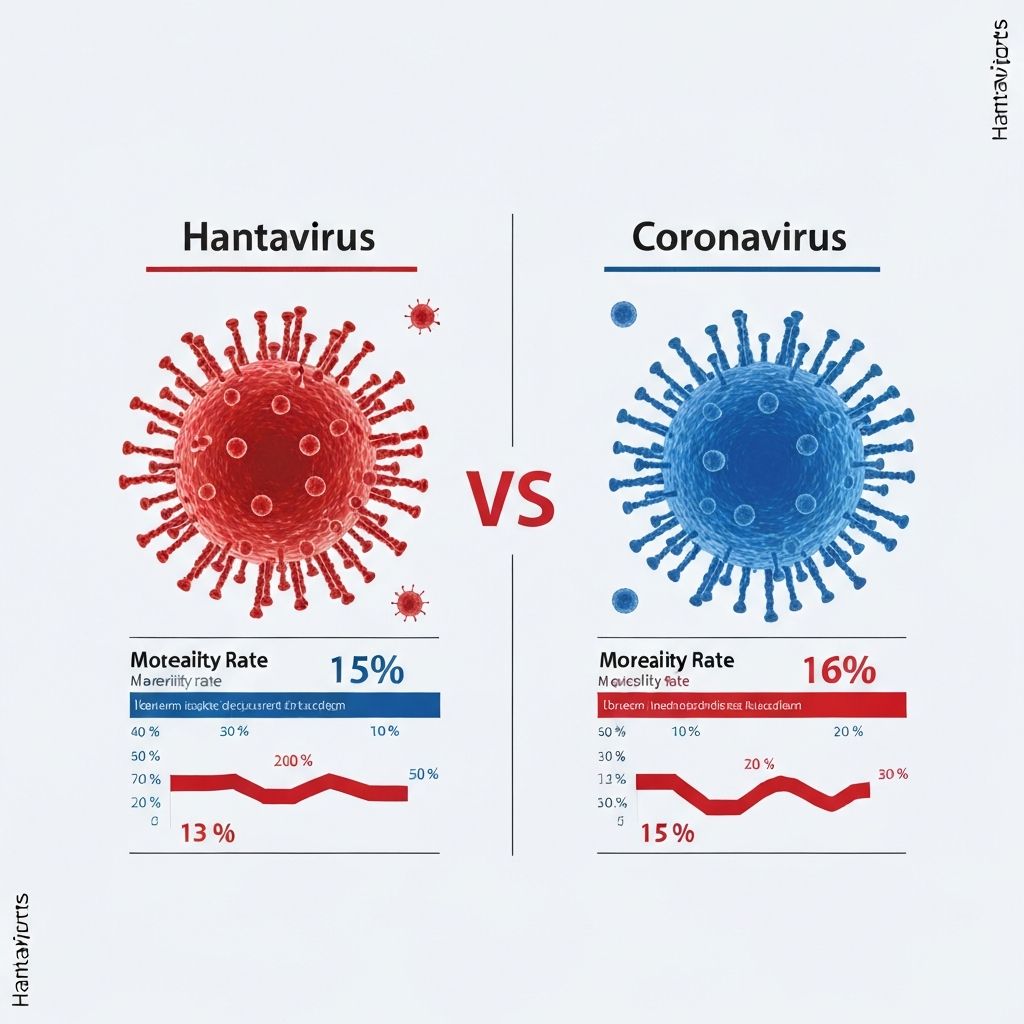
Is hantavirus deadlier than coronavirus? When comparing raw mortality rates, hantavirus appears far more lethal—with case fatality rates reaching 38% for Hantavirus Pulmonary Syndrome (HPS) compared to COVID-19's estimated 1-2% globally. However, this comparison requires careful context to understand the true public health impact of each virus.
This guide examines how hantavirus and coronavirus compare across multiple dimensions, from mortality rates to transmission patterns, based on data from the Centers for Disease Control and Prevention, World Health Organization, and peer-reviewed medical literature.
Quick Answer: Mortality Rate Comparison
| Virus | Case Fatality Rate | Global Deaths | Transmission |
|---|---|---|---|
| Hantavirus (HPS) | ~38% | ~3,000 total (since discovery) | Rodent-to-human (rare human-to-human for Andes strain) |
| Hantavirus (HFRS) | 1-15% | ~150,000 total estimated | Rodent-to-human only |
| COVID-19 (SARS-CoV-2) | ~1-2% | 7+ million confirmed | Human-to-human (highly contagious) |
| SARS (2003) | ~10% | 774 | Human-to-human (moderate spread) |
| MERS | ~35% | 858 | Limited human-to-human |
Understanding the Key Differences
To properly answer whether hantavirus is "deadlier," we must understand what makes these viruses fundamentally different:
Transmission: The Critical Distinction
| Factor | Hantavirus | Coronavirus (COVID-19) |
|---|---|---|
| Primary transmission | Rodent droppings, urine, saliva | Respiratory droplets, aerosols |
| Human-to-human spread | Extremely rare (Andes strain only) | Primary route of infection |
| Contagiousness (R0) | <1 (cannot sustain epidemic) | 2-3 (original), 5-7 (Omicron) |
| Pandemic potential | Very low | Very high (proven) |
Why Fatality Rate Alone Is Misleading
A virus with a 100% fatality rate that only infects 10 people is less deadly overall than a virus with a 1% fatality rate that infects 100 million people. Consider this comparison:
| Metric | Hantavirus (HPS) | COVID-19 |
|---|---|---|
| Case fatality rate | 38% | ~1-2% |
| US cases (total/annual) | ~890 total since 1993 | 100+ million |
| US deaths (total) | ~340 since 1993 | 1.1+ million |
| Global annual cases | 60,000-100,000 (all types) | Billions |
| Global deaths | ~700-1,000 annually | 7+ million total |
Hantavirus Mortality: A Closer Look
Understanding what hantavirus is helps contextualize its mortality statistics.
Hantavirus Pulmonary Syndrome (HPS)
HPS occurs primarily in the Americas and has the highest mortality rate:
| Statistic | Data |
|---|---|
| Case fatality rate | 38% (US average) |
| US cases since 1993 | ~890 |
| Deaths | ~340 |
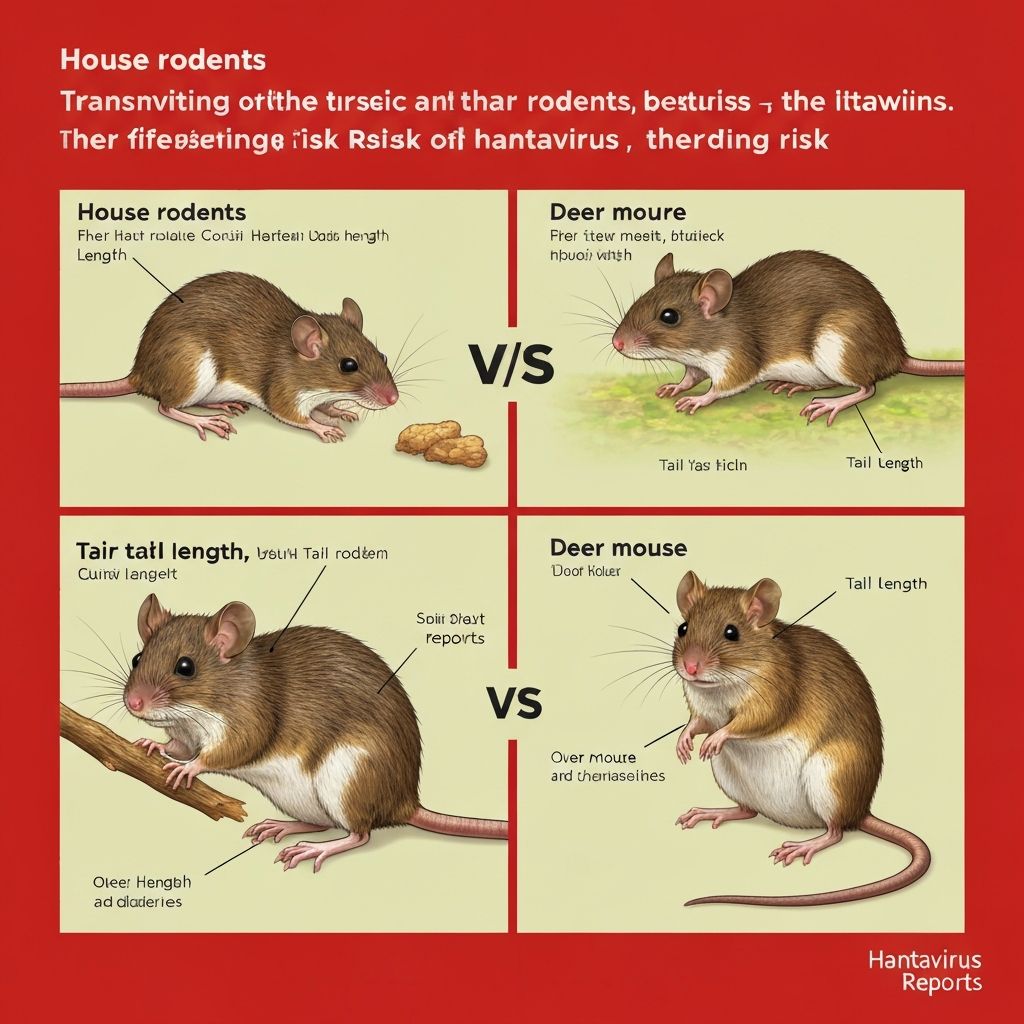
| Primary carrier | Deer mouse (Sin Nombre virus) |
| Geographic hotspot | Four Corners region (US Southwest) |
Hemorrhagic Fever with Renal Syndrome (HFRS)
HFRS is more common globally but generally less fatal:
| Statistic | Data |
|---|---|
| Case fatality rate | 1-15% (varies by strain) |
| Annual global cases | 60,000-100,000 |
| Primary regions | Asia, Europe |
| Primary carriers | Various mice and voles |
Coronavirus Mortality: Context Matters
"Coronavirus" encompasses multiple viruses. Here is how they compare:
| Coronavirus | Year | Case Fatality Rate | Total Deaths |
|---|---|---|---|
| SARS-CoV (SARS) | 2003 | ~10% | 774 |
| MERS-CoV | 2012-present | ~35% | 858 |
| SARS-CoV-2 (COVID-19) | 2019-present | ~1-2% | 7+ million |
| Common cold coronaviruses | Ongoing | Near 0% | Minimal |
Why Hantavirus Cannot Cause a Pandemic
Several biological factors limit hantavirus spread:
- No efficient human-to-human transmission: Unlike COVID-19, hantavirus cannot easily spread between people
- Short infectious window: Even the Andes strain (which can spread person-to-person) has limited transmissibility
- Reservoir-dependent: The virus depends on rodent populations for maintenance
- Geographic limitations: Specific rodent species limit where outbreaks can occur
The recent MV Hondius outbreak involving the Andes strain represents a rare exception where human-to-human transmission may have occurred in a confined setting.
Symptoms Comparison
Both viruses can cause severe respiratory illness, but the progression differs:
| Symptom | Hantavirus (HPS) | COVID-19 |
|---|---|---|
| Incubation period | 1-8 weeks | 2-14 days |
| Early symptoms | Fever, muscle aches, fatigue | Fever, cough, fatigue |
| Progression | Rapid respiratory failure | Variable (mild to severe) |
| Time to severe illness | 4-10 days from symptom onset | 5-14 days |
| Hospitalization rate | Nearly 100% (HPS) | ~5-10% |
| ICU requirement | Very high | Moderate |
Treatment and Survival
| Factor | Hantavirus | COVID-19 |
|---|---|---|
| Antiviral treatment | None approved | Paxlovid, Remdesivir, others |
| Vaccine | None available | Multiple effective vaccines |
| Survival factors | Early ICU care, ECMO | Vaccination, antivirals, supportive care |
| Recovery time | Weeks to months | Days to months |
| Long-term effects | Possible lung damage | Long COVID in some patients |
Risk Factors Comparison
Who Is at Risk for Hantavirus?
- People who disturb rodent habitats (cleaning sheds, cabins)
- Rural residents in endemic areas
- Outdoor workers (farmers, forestry, construction)
- Hikers and campers in rodent-infested areas
- Anyone cleaning rodent-contaminated spaces
Read our guide on whether house mice carry hantavirus to understand which rodents pose the greatest risk.
Who Is at Risk for Severe COVID-19?
- Elderly individuals (65+)
- Immunocompromised patients
- People with underlying conditions (diabetes, heart disease, obesity)
- Unvaccinated individuals
Prevention Strategies
| Prevention Method | Hantavirus | COVID-19 |
|---|---|---|
| Vaccination | Not available | Highly effective vaccines exist |
| Masking | Recommended during cleanup | Effective for respiratory protection |
| Hand hygiene | Important | Very important |
| Environmental control | Rodent exclusion, safe cleaning | Ventilation, air filtration |
| Social distancing | Not applicable (not person-to-person) | Effective prevention measure |
Public Health Perspective
From a public health standpoint, COVID-19 poses a far greater threat despite lower individual fatality rates:
| Public Health Factor | Hantavirus | COVID-19 |
|---|---|---|
| Pandemic potential | None | Proven pandemic pathogen |
| Healthcare system burden | Minimal (rare cases) | Overwhelming (at peaks) |
| Economic impact | Localized | Trillions of dollars globally |
| Vaccination campaigns needed | No | Massive global effort |
| Ongoing surveillance | Regional, targeted | Global, continuous |
The Bottom Line: Which Is "Deadlier"?
The answer depends on how you define "deadlier":
If you mean individual risk of death once infected:Hantavirus (HPS) is deadlier, with a ~38% fatality rate compared to COVID-19's ~1-2%.
If you mean overall threat to human life:COVID-19 is far deadlier, having killed millions compared to hantavirus's thousands.
If you mean pandemic potential:COVID-19 is infinitely more dangerous—hantavirus cannot sustain human-to-human transmission to cause a pandemic.
Frequently Asked Questions
Should I be more worried about hantavirus or COVID-19?
For most people, COVID-19 remains the greater day-to-day concern due to its prevalence and ease of transmission. However, if you work in environments with rodent exposure or plan to clean rodent-infested areas, hantavirus precautions are essential.
Can hantavirus become as contagious as COVID-19?
This is extremely unlikely. Hantaviruses have evolved to spread primarily through rodent reservoirs. The biological changes required for efficient human-to-human transmission would be substantial. However, scientists monitor all hantavirus strains for concerning mutations.
Why is there no hantavirus vaccine if it is so deadly?
The rarity of hantavirus cases (fewer than 50 per year in the US) makes vaccine development less commercially viable. Additionally, the virus's multiple strains would require a multivalent vaccine. Research continues, but no vaccine is currently available.
Can I catch hantavirus from someone with COVID-19-like symptoms?
It is extremely unlikely. Outside of the Andes strain in South America (and the rare MV Hondius situation), hantavirus does not spread person-to-person. If someone has respiratory symptoms, COVID-19 or influenza are far more likely causes.
How can I get tested for hantavirus?
Hantavirus testing requires specialized laboratory analysis and must be ordered by a healthcare provider. There are no home tests available.Conclusion
While hantavirus has a significantly higher case fatality rate than COVID-19 (38% vs. 1-2%), the coronavirus has proven far more dangerous to global public health due to its efficient human-to-human transmission. Hantavirus remains a serious but rare threat primarily affecting those with rodent exposure, while COVID-19 became a worldwide pandemic affecting billions.
Both viruses deserve respect and appropriate precautions:
- For hantavirus: Practice safe rodent cleanup, seal homes against rodent entry, seek immediate care if exposed and symptomatic
- For COVID-19: Stay current on vaccinations, practice good respiratory hygiene, seek testing and treatment when ill
Track global hantavirus cases on our statistics dashboard and interactive map, and stay informed through our latest news.
*This article is for informational purposes only and does not constitute medical advice. Consult healthcare providers for personal medical guidance. Data sourced from CDC, WHO, and peer-reviewed literature.*